

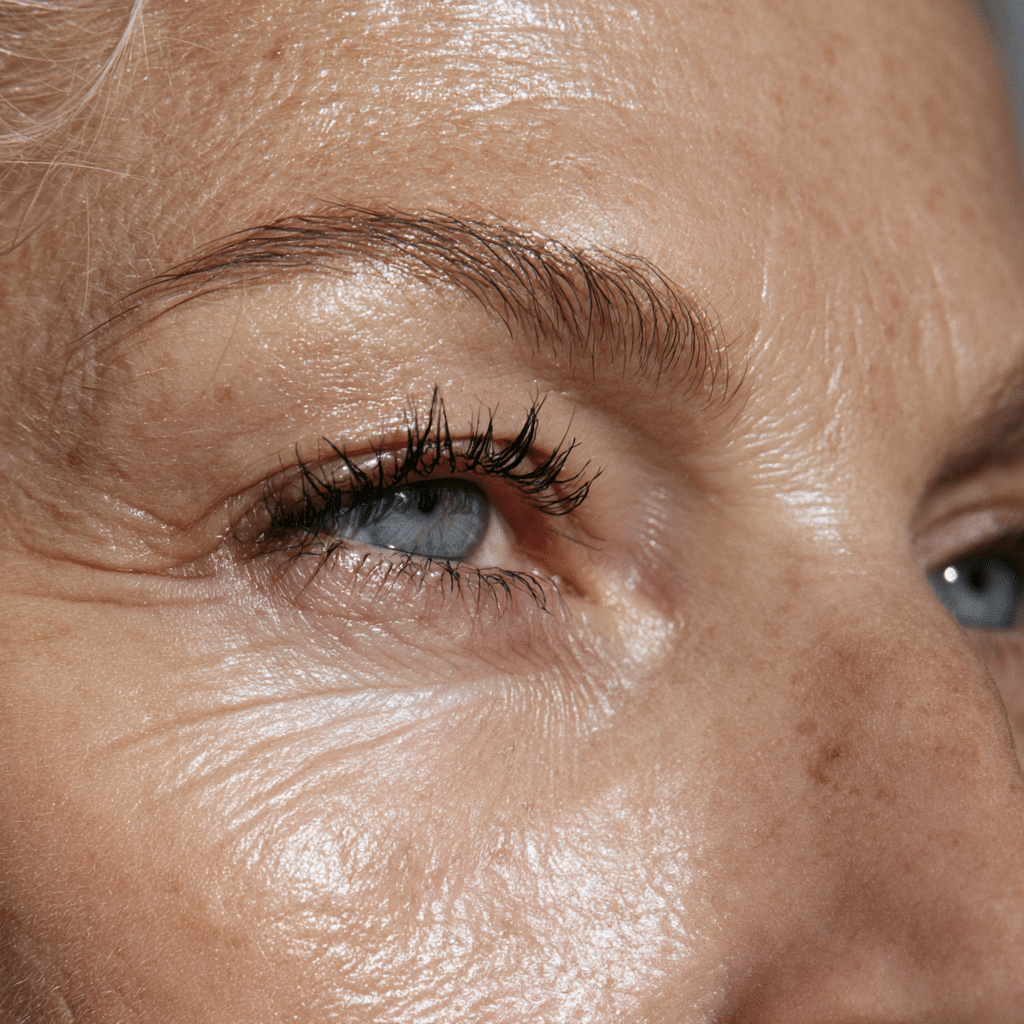
Letybo is the newest FDA-approved wrinkle relaxer in the United States. But this injectable is not exactly new to aesthetic medicine. Letybo contains letibotulinumtoxinA-wlbg, a botulinum toxin type A formulation. The FDA approved Letybo in February 2024. Its approved use is specific to moderate-to-severe glabellar lines in adults. So, is Letybo worth the hype? For some patients, it may be an excellent option. However, the best wrinkle relaxer depends on more than brand recognition. Your anatomy, goals, muscle strength, and treatment history all matter. Your injector’s technique matters, too. At L’AVENUE Derm, the approach starts with your face. The product comes second.
What Is Letybo?
Letybo is a prescription injectable containing botulinum toxin type A. It belongs to the same broad treatment category as other neuromodulators. These include Botox, Dysport, Xeomin, Jeuveau, and Daxxify. Neuromodulators temporarily reduce targeted muscle activity. They do this by blocking nerve signals that trigger muscle contraction. Repeated facial movement contributes to dynamic wrinkles over time. Relaxing specific muscles can soften those expression-related lines. However, FDA approval matters when discussing Letybo. In the United States, Letybo is approved for glabellar lines. These are the vertical lines between the eyebrows. Using neuromodulators elsewhere can involve clinical judgment and specific treatment protocols. Your physician should determine appropriate treatment areas during consultation.
Why Is Letybo Getting So Much Attention?
Letybo brings another option to an increasingly competitive market. The product was developed by Hugel, a South Korean aesthetics company. Hugel reports a global presence spanning more than 70 countries. That international history adds useful context. Still, global availability does not replace U.S. clinical evidence. Letybo was evaluated through dedicated clinical trials. Those trials included more than 1,200 patients. Participants had moderate-to-severe glabellar lines. The FDA based approval on three randomized clinical trials. These studies were called BLESS I, BLESS II, and BLESS III. The studies used Letybo at five injection sites. Treatment targeted the corrugator and procerus muscles. These muscles create much of the classic “11” appearance. They also contribute to a tense or tired facial expression.
What Does the Clinical Research Show?
The clinical data behind Letybo is encouraging. The pivotal studies enrolled 1,276 participants. Of those participants, 957 received Letybo. Another 319 participants received placebo. The primary endpoint was assessed at Week 4. Researchers measured whether wrinkles became none or mild. They also required at least a two-grade improvement. Both investigators and participants provided assessments. There was statistically significant improvement versus placebo. A separate Phase 3 study provides additional detail. That study included 355 adults with moderate-to-severe glabellar lines. Participants received either 20 units of letibotulinumtoxinA or placebo. At Week 4, 78.6% were investigator-rated responders. The participant-rated response rate reached 68.8%. The composite responder rate reached 64.7%. The placebo composite response rate was 0%. These differences were statistically significant.
How Quickly Does Letybo Work?
Some patients notice changes surprisingly quickly. In the Phase 3 study, improvement appeared as early as Day 2. The median onset of effect was three days. That does not mean everyone sees results within three days. Neuromodulators work progressively. Your muscles need time to respond to treatment. Most patients should expect continued improvement during the first two weeks. Your final result should be judged after the treatment has settled. This distinction matters when comparing wrinkle relaxers. A faster early response does not automatically mean a better treatment. The ideal product should match your anatomy and aesthetic goals.
How Long Does Letybo Last?
This is where online marketing can become misleading. Letybo should not be marketed as a universally longer-lasting wrinkle relaxer. Current evidence does not support that conclusion. In the Phase 3 study, the mean time until retreatment was approximately 127 days. That equals roughly four months. A recent systematic review also found sustained efficacy through Weeks 12 and 16. However, individual results vary considerably. Your metabolism can influence how quickly effects fade. So can muscle strength, treatment area, dosage, and technique. Previous neuromodulator exposure may also influence your experience. For many patients, three to four months is a realistic planning range. Some patients may experience shorter or longer results.
Can Letybo Treat Forehead Lines and Crow’s Feet?
This requires an important distinction. Letybo’s U.S. FDA approval covers glabellar lines. That means the area between your eyebrows. Other facial areas may involve different clinical considerations. Treatment should always be determined by a qualified medical professional. The forehead requires particularly careful assessment. The frontalis muscle helps lift the eyebrows. Over-relaxing it can affect brow position. Crow’s feet also require precise treatment planning. The goal should be softening movement without creating an unnatural appearance. At L’AVENUE Derm, treatment planning is individualized according to facial anatomy and desired results.
Is Letybo Better Than Botox?
There is no universal winner. Botox has decades of clinical experience and extensive published evidence. Letybo offers another evidence-supported botulinum toxin option. The products should not be judged by branding alone. Different toxins have different formulations and manufacturing characteristics. Their labeled dosing and units should not be casually interchanged. Most importantly, toxin units are product-specific. One product’s unit does not automatically equal another product’s unit.
Your injector should determine the appropriate product and dose. The question should be more personal.
- What are you trying to change?
- Do you want softer frown lines?
- Do you want to preserve more facial movement?
- Do you have strong glabellar muscles?
- Have you previously received Botox or another neuromodulator?
These questions can be more useful than asking which product is newest.
What About Neuromodulator “Non-Responders”?
This is one claim that deserves nuance. Some patients report disappointing results from a particular neuromodulator. That does not automatically mean they are biologically resistant. Technique can influence results significantly. Incorrect placement can produce an underwhelming outcome. Inadequate dosing can also contribute. Strong muscles may require a different treatment strategy. Timing matters, too. If a patient receives treatment too frequently, antibody formation can rarely become relevant. However, clinically significant resistance remains uncommon in cosmetic practice. Switching products can sometimes be reasonable. But there is limited evidence proving Letybo specifically solves Botox resistance. Therefore, “Botox non-responder” should not be treated as a diagnosis. A careful assessment should come first.
Does Letybo Have Good Safety Data?
Overall, the clinical trial safety profile was favorable. The pivotal trials evaluated safety alongside effectiveness. The FDA found the overall benefit-risk profile acceptable for its approved indication. The Phase 3 publication also described Letybo as well tolerated. Like other botulinum toxin products, side effects can occur. Injection-site discomfort, redness, swelling, or bruising can happen. Headache can also occur. More specific complications depend on the injection area. For glabellar treatment, temporary eyelid or brow changes are possible. Careful anatomy assessment helps reduce these risks. Botulinum toxin products also carry important medical warnings. Treatment should therefore be performed by appropriately qualified medical professionals.
Can Letybo Improve More Than Your Appearance?
Interestingly, clinical research examined this question. Researchers evaluated the psychological burden associated with glabellar lines. The analysis included 1,272 treated participants. At baseline, 85.5% reported moderate-to-severe psychological impact. Letybo produced significant improvements across multiple patient-reported measures.
These included quality-of-life and satisfaction assessments. The findings were statistically significant versus placebo. This does not mean wrinkle treatment improves mental health for everyone. It does show that facial appearance can influence self-perception. It also highlights why patient-reported outcomes matter. Aesthetic medicine should never reduce treatment to wrinkle measurements alone.
Who Might Be a Good Letybo Candidate?
Letybo may suit adults bothered by glabellar lines. The best candidates usually have realistic expectations. They should also understand that results are temporary. A consultation should consider your facial anatomy and movement patterns. Your medical history also matters. Certain medical conditions and medications can affect treatment decisions. Pregnancy and breastfeeding may also require special consideration. A qualified physician can determine whether treatment is appropriate. At L’AVENUE Derm, the philosophy centers on personalized aesthetic care. The practice combines dermatology, aesthetics, and broader skin-health considerations.
What Makes the Injector More Important Than the Brand?
A great injectable requires more than a great formulation. Facial anatomy varies dramatically between patients. Two people can have similar wrinkles. Their muscles can behave very differently. The ideal treatment therefore requires observation. Your physician should assess muscle strength and movement. They should also consider brow position and facial proportions. The goal should be refinement rather than frozen expression. This is particularly important for luxury aesthetic medicine. The most elegant result often looks like you rested well. It should not immediately announce that you had injections. That philosophy fits naturally with a personalized approach at L’AVENUE Derm.
Letybo and a More Complete Facial Rejuvenation Plan
Neuromodulators address muscle movement. They do not replace treatments designed for volume loss or skin quality. Dermal fillers work differently. They can restore volume and improve facial contour. L’AVENUE Derm offers hyaluronic acid and biostimulatory filler options. Skin-focused treatments can complement injectable treatments, too. L’AVENUE Derm offers signature rejuvenating facials. These treatments focus on hydration, radiance, texture, and overall skin quality. Some patients may benefit from a broader treatment strategy. That could include neuromodulators, fillers, lasers, or skin treatments. The right combination depends on your individual goals. This approach is often called pan-facial rejuvenation. It considers the face as a connected aesthetic system. The goal is balance rather than treating isolated lines.
Is Letybo Worth the Hype?
The short answer is yes, with an important caveat. Letybo has meaningful clinical evidence behind it. It is FDA-approved for moderate-to-severe glabellar lines in adults. Clinical trials demonstrated significant improvement versus placebo. Results appeared quickly for many participants. The available evidence also supports approximately three-to-four months of typical effect. However, individual duration varies. What the evidence does not prove is that Letybo is universally superior. It does not prove that Letybo always lasts longer. It does not prove that it reverses Botox resistance. Those claims go beyond the strongest available evidence. The more useful question is different.
Is Letybo the right neuromodulator for your face?
That answer requires an individualized consultation.
The L’AVENUE Derm Approach to Wrinkle Relaxers
At L’AVENUE Derm, injectable treatment is part of a larger aesthetic strategy. The practice offers neuromodulators alongside dermal fillers and other treatments. The goal is personalized care rather than a one-product-fits-all approach. Your physician can assess movement, proportions, skin quality, and previous treatments. That assessment can guide the choice of neuromodulator. It can also determine whether another treatment belongs in your plan. For patients seeking subtle refinement, this distinction matters. The newest injectable is not always the best injectable. The best treatment is the one that fits your face.
The Bottom Line
Letybo is a legitimate addition to the wrinkle-relaxer landscape. Its FDA approval is supported by three pivotal clinical trials. Those studies included more than 1,200 participants. Research demonstrates significant improvement in glabellar lines. Studies also report rapid onset and favorable tolerability. Current evidence supports effects lasting several months. However, individual results can vary. Letybo is not automatically better than Botox or other neuromodulators. Your anatomy and aesthetic goals should guide the decision. If you are considering Letybo in NYC, start with a consultation. A personalized assessment can help identify your best treatment strategy.
This article is for general educational purposes only. It does not provide individualized medical advice or establish a patient relationship. Letybo treatment requires evaluation by board-certified dermatologists. Individual results, risks, and treatment recommendations vary.
References
- U.S. Food and Drug Administration. Drug Trials Snapshot: LETYBO.
- U.S. Food and Drug Administration. Letybo Prescribing Information.
Mueller DS, et al. Efficacy and Safety of Letibotulinumtoxin A.
Aesthetic Surgery Journal. 2022;42(6):677–688.Cox SE, et al. LetibotulinumtoxinA and Psychological Burden.
Dermatologic Surgery. 2024;50(6):535–541.Efficacy and Safety of LetibotulinumtoxinA: Systematic Review and Meta-Analysis.
Aesthetic Plastic Surgery. 2026.