

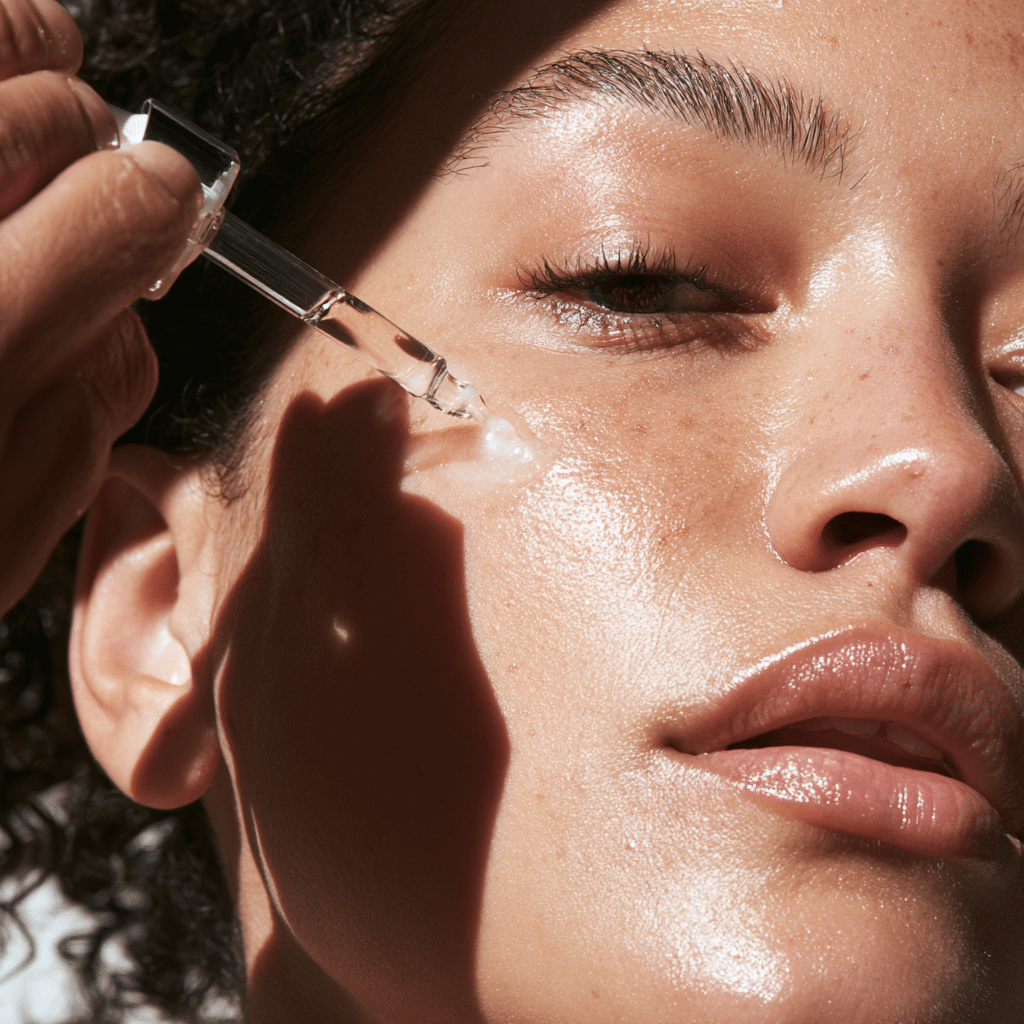
Somewhere between the eleven-step routines promising overnight transformation and the minimalist “just use sunscreen” camp lies the actual answer: a plan built around what your skin is specifically doing, not a checklist borrowed from someone else’s medicine cabinet. Fine lines, volume loss, texture, and pigmentation are different problems with different mechanisms. This means the routine that transforms your friend’s complexion may do very little for yours.
Start by Naming What’s Actually Changing
Before adding a single product, get precise about what you’re seeing:
- Fine lines and wrinkles – from repeated muscle movement and gradual collagen loss
- Volume loss – hollowing through the cheeks, temples, or under-eyes, largely from natural fat and bone changes with age
- Texture – roughness, enlarged pores, or a duller surface, usually the fingerprint of cumulative sun exposure
- Pigmentation – sun spots and uneven tone, driven primarily by UV exposure over time
- Laxity – a loosening of the skin, tied to collagen and elastin breakdown
Most people are dealing with some combination of these, but one or two are usually doing most of the damage – and your plan should be weighted accordingly.
The Foundation Nearly Everyone Needs
Regardless of your specific concerns, a few essentials belong in almost every effective skincare routine. Each has stronger evidence than many of the trends dominating the beauty world.
Sunscreen, every single day. The strongest evidence comes from the Nambour trial in Australia. This randomized controlled study followed adults for four and a half years. Researchers found that daily sunscreen use reduced visible skin aging by 24% compared with occasional use. Few skincare interventions have been studied this rigorously.
A retinoid, introduced slowly. Tretinoin has been a benchmark anti-aging ingredient since the 1980s. A comprehensive 2025 meta-analysis of randomized trials further supports its effectiveness. The research found measurable and statistically significant improvements in both fine and coarse wrinkles compared with moisturizer alone. Newer over-the-counter formulations, including retinol combinations and next-generation retinoid precursors, have also shown meaningful results. These options are generally gentler, although their effects can vary.
A gentle cleanser and barrier-supporting moisturizer. Your skin barrier provides essential protection and helps maintain hydration. When that barrier becomes compromised, irritation can increase and active ingredients may become harder to tolerate. Consequently, aggressive routines can sometimes undermine the very results they are designed to achieve.
An antioxidant serum, typically vitamin C. Used during the day, vitamin C can provide antioxidant support against environmental stressors. It may also complement your sunscreen routine by helping address oxidative stress from pollution and incidental ultraviolet exposure. However, antioxidants should supplement sunscreen rather than replace it.
Layering In Treatment for Your Specific Concern
Once the foundation is genuinely in place- not before – targeted additions can address what’s specific to you:
- For fine lines: a well-tolerated retinoid strength, with neuromodulators considered if dynamic movement is the primary driver
- For volume loss: dermal filler, used conservatively and placed with real attention to facial anatomy
- For texture: chemical peels or laser resurfacing, calibrated to severity
- For pigmentation: topical brighteners alongside in-office options like peels or laser
- For laxity: radiofrequency or microneedling, to support the skin’s own collagen remodeling
The Sequencing Mistake Almost Everyone Makes
Adding five new actives at once is the fastest way to sabotage a routine – not because more is inherently bad, but because it makes it impossible to know what’s actually working, and dramatically raises the odds of irritation. The better approach introduces one new ingredient at a time, gives it several weeks before judging it, and layers in-office treatments around a stable at-home foundation rather than as a substitute for one.
Skin Isn’t Static – Neither Should Your Plan Be
What worked at 28 often needs revisiting by 38, as concerns shift from prevention toward more targeted correction. A plan that made sense before a pregnancy, a cross-country move, or a new medication may not make sense after. Reassessing every six to twelve months – or after any significant life change – keeps the plan honest to what your skin is actually doing now, not six years ago.
This is also where patience earns its keep. The retinoid research that supports this entire approach tracked improvement over months, with some trials following patients for up to two years of continuous use. The visible payoff compounds well past the point most people give up. A plan reassessed too frequently, before an ingredient has had a fair chance to work, can feel like starting over every few weeks without ever actually building anything.
Why “Personalized” Isn’t Just a Marketing Word Here
Anti-aging skincare is a category where trends move faster than evidence, and where what worked for a friend, an influencer, or a magazine’s “holy grail” list may be doing nothing for your actual concerns – or actively working against them. A plan built from a real assessment of your skin type, sun history, and goals consistently outperforms one assembled from whatever’s currently trending, because it treats what your skin is actually doing rather than a generic industry checklist.
Building This Plan at L’AVENUE Derm
A personalized anti-aging consultation starts with understanding your specific concerns, skin type, and sun exposure history, then builds a plan combining the right foundational products with any in-office treatments that genuinely move the needle for you – reassessed over time as your skin, and your life, change.
The Takeaway
An effective anti-aging plan starts with naming your specific concerns, builds on a foundation the evidence actually supports, layers in targeted treatment where you need it most, and evolves as your skin does. The goal was never a longer routine – it was the right one.
This article is for general educational purposes. A personalized consultation can help identify your skin’s specific needs and build a plan suited to them.