

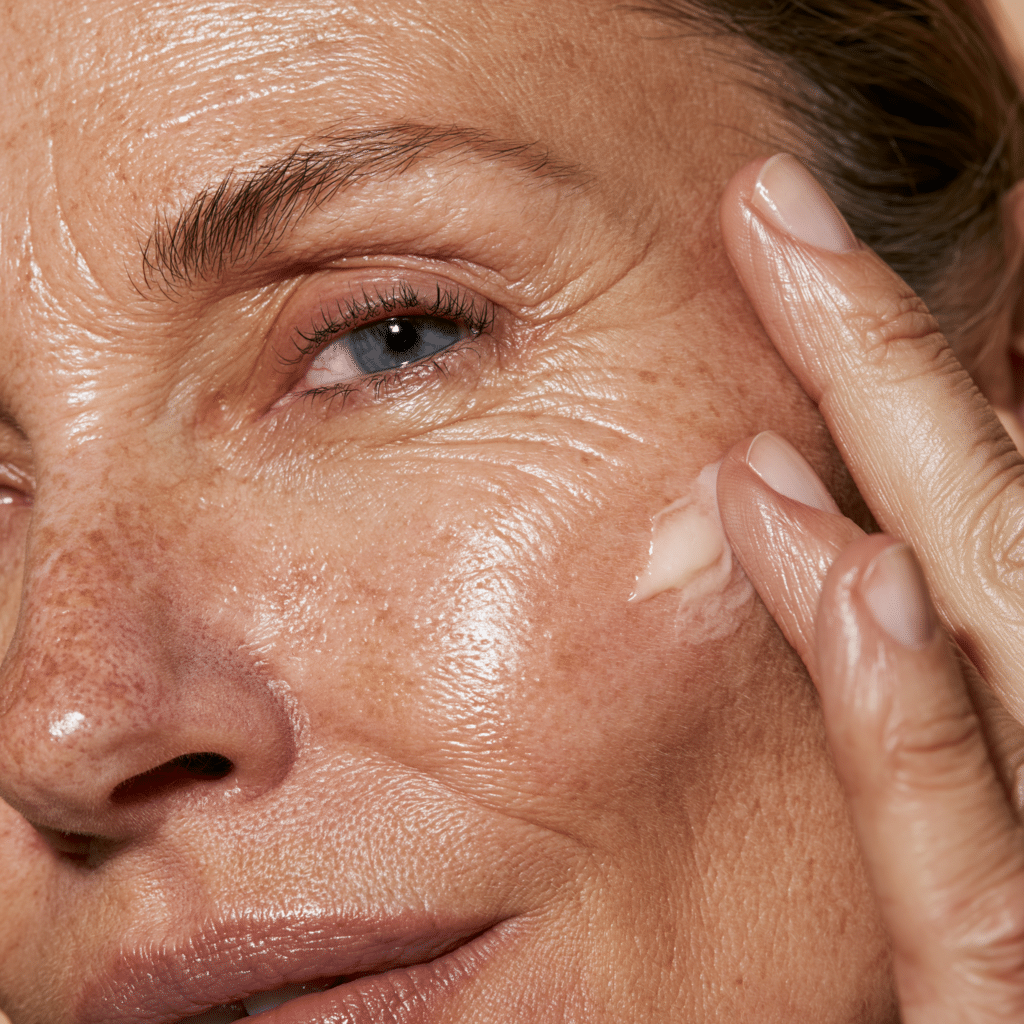
There is a particular kind of overwhelm that comes from standing in front of a skincare shelf – or scrolling a dermatologist’s Instagram at midnight – trying to decode where, exactly, to begin. Retinol or retinoid? Peptides or PDRN? A laser now, or wait? The honest answer is less glamorous than any single product promises: the right starting point isn’t a product at all. It’s an assessment.
The Question Isn’t “What Should I Buy?”- It’s “What Is My Skin Actually Doing?”
Skin ages through two entangled processes: intrinsic aging, the slow genetic clock ticking beneath the surface, and photoaging, the cumulative toll of decades of sun exposure layered on top of it. Most of what we actually see in the mirror – the fine lines, the uneven tone, the loss of that lit-from-within bounce – traces back overwhelmingly to the second category, which is, encouragingly, the one we have real power over.
This is precisely why a dermatology-led starting point looks different for every patient. Someone with early textural changes and sun damage needs an entirely different first move than someone whose primary concern is volume loss along the cheeks, or someone dealing with both at once. An assessment – of skin type, sun history, current routine, and honest goals – is what separates a plan that works from a shelf of good intentions.
The Unglamorous Truth: Two Things Do Most of the Heavy Lifting
Before any conversation about lasers or injectables, the research is remarkably consistent on two fundamentals.
Sunscreen, worn daily, actually changes your skin’s trajectory. This isn’t marketing language – it’s a landmark, randomized, controlled clinical trial. In the Nambour Skin Cancer Prevention study out of Queensland, Australia, researchers followed adults under 55 for four and a half years, randomly assigning half to daily broad-spectrum sunscreen use and half to their usual, discretionary habits. The daily-sunscreen group showed a 24% reduction in visible skin aging compared to the discretionary group – measured not by self-report, but by blinded assessment of skin’s surface texture. Few anti-aging claims have this kind of rigorous, randomized backing.
Retinoids remain the best-studied topical ingredient for reversing what sun exposure has already done. A 2025 systematic review and meta-analysis pooling multiple randomized, placebo-controlled trials found that topical tretinoin produced statistically significant improvement in both fine and coarse wrinkles compared with a vehicle cream – a finding echoed across decades of research dating back to the 1980s. It isn’t an overnight ingredient, and it isn’t glamorous, but it’s one of the few topicals with this level of evidence behind it.
Everything else – the serums, the devices, the eventual injectables – performs best layered on top of this foundation, not instead of it.
When In-Office Treatment Enters the Picture
Once those fundamentals are in place, a dermatologist can layer in treatments suited to what your skin still needs:
- Chemical peels, for early texture and tone concerns
- Laser treatments, for more established photoaging and collagen support
- Neuromodulators and dermal fillers, for dynamic lines and volume changes
- Radiofrequency and microneedling, to support the skin’s own collagen-building process
The sequencing and the restraint matters as much as the treatments themselves. A face treated all at once, with every available technology, rarely looks as considered as one built thoughtfully over time.
Preventative or Corrective? It Depends Where You’re Standing
If you’re in your 20s with minimal visible photoaging, the highest-yield move is almost entirely preventative: daily SPF, an early retinoid, and restraint with procedures used selectively rather than routinely. If you’re seeing established lines, textural changes, or volume shifts, a more corrective plan – combining professional treatment with an updated topical routine will typically move the needle further and faster.
Neither path is more “serious” than the other. They’re simply suited to different chapters, and knowing which chapter you’re in is the entire point of a proper consultation.
Setting Expectations You Can Actually Live With
One of the quieter benefits of starting with an assessment rather than a wish list is that it recalibrates expectations early. Sunscreen and a retinoid are not going to erase two decades of sun exposure in six weeks. The tretinoin research itself shows meaningful improvement building over months, not days, with studies tracking benefit out to two years of continuous use. Procedures move faster, but even those work best as part of an ongoing relationship with your skin rather than a single dramatic before-and-after. The patients who tend to be happiest with their results are usually the ones who came in with a realistic timeline, not the ones chasing an overnight transformation.
Why This City Adds Its Own Chapter
New York doesn’t make this easy. Pollution exposure, indoor heat that dries the skin barrier all winter, and a pace of life that makes an eight-step routine feel aspirational rather than realistic — a genuinely NYC-calibrated plan has to account for all of it, not just generic skin type.
What This Looks Like at L’AVENUE Derm
A consultation typically starts by mapping your skin type, sun exposure history, current routine, and goals before recommending anything. From there, a plan might combine medical-grade skincare, in-office treatments like customized peels or laser therapy, and when appropriate, thoughtfully dosed injectables, sequenced specifically for where your skin is right now, not a generic package applied to everyone who walks through the door.
The Takeaway
The right starting point for anti-aging dermatology was never a specific serum or a single procedure. It’s an accurate read of what your skin actually needs, built on a foundation the research genuinely supports: sunscreen, worn every day, and a retinoid, used consistently. Everything more advanced works better layered on top of that, not around it.
This article is for general educational purposes. A personalized consultation is the most reliable way to determine which anti-aging approach fits your skin.