

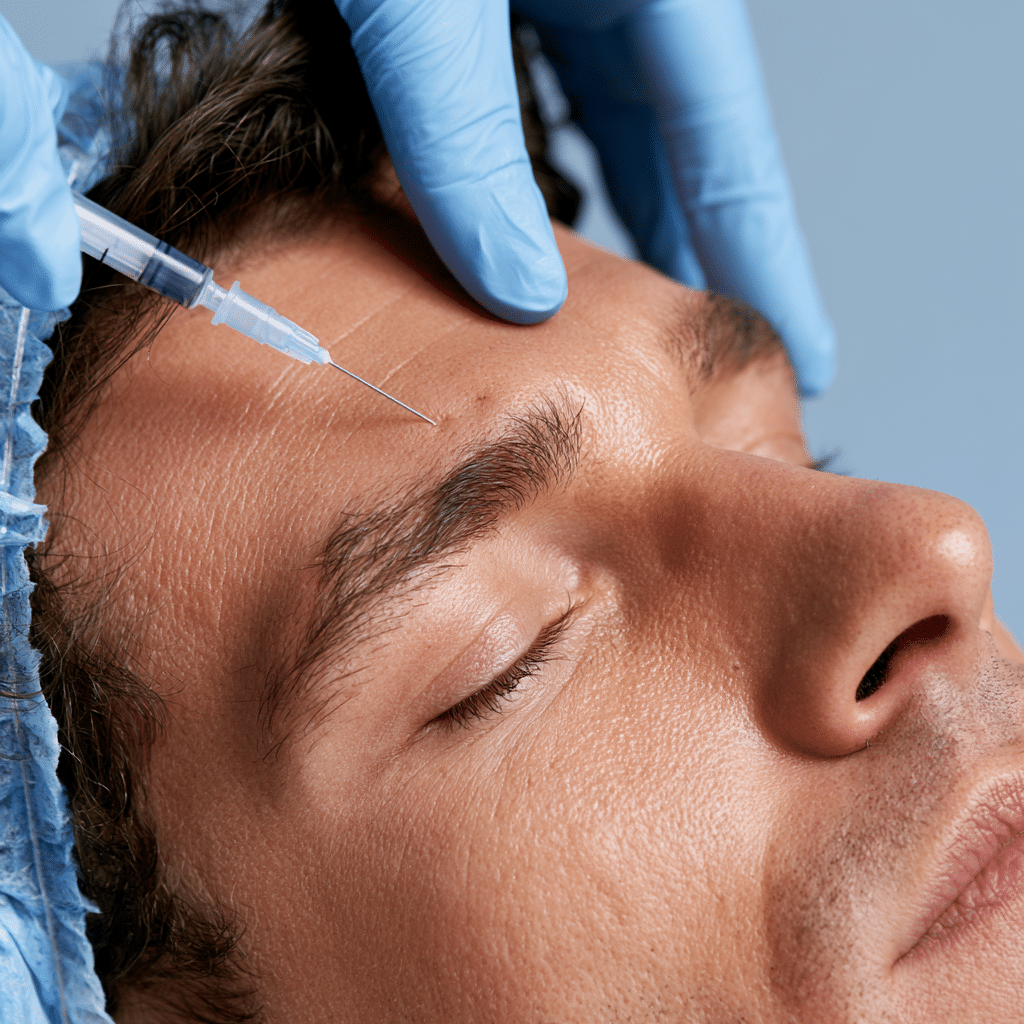
hinking about Botox or neuromodulators but not sure if it’s right for you? You’re not alone. Patients often ask us the same questions: When should I start Botox? Will my wrinkles get worse when it wears off? Can I get Botox while pregnant or breastfeeding? Let’s break it down in simple terms.
At What Age Should You Start Botox?
There is no universal “right age” to start Botox. Botox is not necessarily something you need to begin at a particular birthday. A better way to think about treatment is to consider your individual facial movement and the appearance of dynamic lines. Dynamic wrinkles are lines that become visible when you make facial expressions, such as:
- Frown lines between the eyebrows
- Forehead lines
- Crow’s feet around the eyes
- Other expression-related lines
Some people begin considering Botox in their late 20s or 30s when expression lines are becoming more noticeable. Others may not need it until later or may decide they do not want it at all.
Is “Preventative Botox” Necessary?
The term preventative Botox is often used to describe treating dynamic wrinkles before they become deeply etched into the skin. While reducing repetitive muscle movement can soften the appearance of existing expression lines, Botox is not a requirement for preventing aging. A thoughtful treatment plan should focus on appropriate dosing, conservative treatment, and maintaining natural facial expression, rather than automatically treating someone because they have reached a certain age.
Who Should Not Get Botox?
Botox is considered safe and effective when appropriately administered, but it is not right for everyone. You should tell your dermatologist if you:
- Have had an allergic reaction or other significant reaction to a botulinum toxin product
- Have certain neuromuscular conditions
- Have difficulty swallowing or breathing
- Have significant facial muscle weakness or certain eyelid problems
- Are taking medications that could interact with botulinum toxin
- Have had previous facial surgery or other cosmetic procedures
- Are pregnant, planning to become pregnant, or breastfeeding
Your medical history, medications, previous procedures, and treatment goals should all be reviewed before injections. The FDA prescribing information specifically advises patients to discuss pregnancy, breastfeeding, allergies, swallowing or breathing problems, and other relevant medical conditions with their healthcare provider. Importantly, Botox should be administered in an appropriate medical setting by a qualified medical professional. The American Academy of Dermatology recommends seeing a dermatologist for botulinum toxin treatment and cautions against injections performed in non-medical settings such as salons, parties, or homes.
Does Botox Make Wrinkles Worse When It Wears Off?
No. Botox does not typically make your wrinkles worse when it wears off.
Botox temporarily reduces the activity of targeted muscles. As the effect gradually fades, muscle movement returns and your facial expressions return to their baseline. Because Botox does not permanently stop the normal aging process, the lines you had before treatment may gradually become visible again. This can sometimes feel like your wrinkles have suddenly become worse, particularly if you have become accustomed to seeing smoother skin.
There is also evidence that with repeated treatments, the treated muscle can become thinner, potentially allowing results to last longer in some patients. That said, Botox is not a substitute for a comprehensive skin-aging strategy. Sun protection, appropriate skincare, healthy lifestyle habits, and other dermatologic treatments can all play a role in maintaining healthy, youthful-looking skin.
Can You Get Botox While Pregnant?
Cosmetic Botox is generally postponed during pregnancy. The primary issue is not that Botox has been proven to cause birth defects; rather, there is not enough definitive human safety data to establish that cosmetic Botox is safe during pregnancy.
The FDA labeling states that there are no adequate studies establishing the developmental risk of Botox Cosmetic in pregnant women. The American Academy of Dermatology similarly notes that cosmetic procedures are generally postponed during pregnancy and that the use of botulinum toxin should be limited because definitive safety data are lacking.
For an elective cosmetic treatment, the safest and most prudent approach is usually to wait until after pregnancy. If you are pregnant or planning to become pregnant, discuss your individual situation with your obstetrician and dermatologist.
Can You Get Botox While Breastfeeding?
The answer is more nuanced because there is limited information about Botox during breastfeeding. The current prescribing information states that there are no data regarding the presence of Botox Cosmetic in human or animal milk, its effects on a breastfed infant, or its effect on milk production.
MotherToBaby’s 2026 review also notes the limited available research concerning onabotulinumtoxinA exposure during pregnancy and breastfeeding. Because cosmetic Botox is elective, many physicians recommend postponing treatment while breastfeeding when possible, particularly when the potential benefit is purely aesthetic. Your dermatologist and pediatrician or obstetric provider can help you make an individualized decision based on your circumstances.
What Happens If You Stop Botox?
You do not have to continue Botox indefinitely. If you decide to stop treatments, the effects gradually wear off and muscle activity returns. Your face will continue to age naturally, just as it would have without Botox. Some patients choose regular maintenance treatments, while others receive Botox only for special occasions or when specific lines become bothersome. There is no requirement to maintain a continuous treatment schedule.
The goal should always be to create results that look natural and appropriate for you, rather than making your face look frozen or expressionless. Experienced dermatologists strategically treat targeted muscles while preserving natural facial movement.
Botox at L’AVENUE Derm
At L’AVENUE Derm, neuromodulator treatments are designed around each patient’s facial anatomy, aesthetic preferences, and long-term skin goals. Our board-certified dermatologists and plastic surgeons offer a range of neuromodulators, including Botox, Dysport, Xeomin, Jeuveau, and Daxxify. The appropriate product and treatment plan depend on your treatment area, desired result, and previous experience with neuromodulators. Rather than asking, “Am I old enough for Botox?” a better question is: “Is Botox appropriate for my face, my goals, and my stage of life?” A personalized consultation can help answer that question and determine whether Botox, another aesthetic treatment, or simply a well-designed skincare routine is the best choice.
Frequently Asked Questions About Botox
What is the best age to start Botox? There is no medically established ideal age. Botox may be appropriate when dynamic expression lines become a concern, provided you are a suitable candidate and have realistic expectations.
How long does Botox last? Results commonly last about three to four months, although individual results vary.
Will I look older if I stop Botox? No. Stopping Botox does not cause accelerated aging. The effects simply wear off, allowing muscle movement and the appearance of your natural expression lines to return.
Can Botox prevent wrinkles? Botox reduces the muscle activity that contributes to dynamic expression lines. It can soften existing wrinkles, and some people use it before lines become deeply etched. However, it is not a guarantee against future wrinkles or skin aging.
Is Botox safe? Botox has a long history of medical and cosmetic use when administered appropriately. However, as with any medical procedure, there are potential risks and side effects. A consultation with a qualified medical professional is important before treatment.
Can I get Botox if I am pregnant? Cosmetic Botox is generally postponed during pregnancy because adequate safety data are not available. Discuss any previous or planned treatment with your obstetrician and dermatologist.
Can I get Botox while breastfeeding? There is insufficient evidence to establish the safety of cosmetic Botox during breastfeeding. Because it is an elective treatment, many patients choose to postpone injections until after breastfeeding. Discuss your individual situation with your healthcare providers.
The Bottom Line
There is no single age when everyone should start Botox. The best time depends on your facial anatomy, the presence of dynamic wrinkles, your aesthetic goals, and your overall health. Botox does not make wrinkles worse when it wears off, but the natural aging process continues. And while Botox has an established history of use, cosmetic treatment is generally postponed during pregnancy, with breastfeeding requiring an individualized discussion because safety data remain limited.
For patients considering Botox in New York City, a consultation with an experienced, board-certified dermatologist can help determine whether neuromodulator treatment is appropriate and, if so, how to achieve subtle, natural-looking results.
L’AVENUE Derm is located at 30 East 60th Street, Suite 1902, New York, NY 10022, and provides personalized cosmetic and dermatologic care in Manhattan.
This article is intended for educational purposes and does not replace individualized medical advice. Patients who are pregnant, breastfeeding, planning pregnancy, or have significant medical conditions should discuss Botox with their appropriate healthcare providers before treatment.