
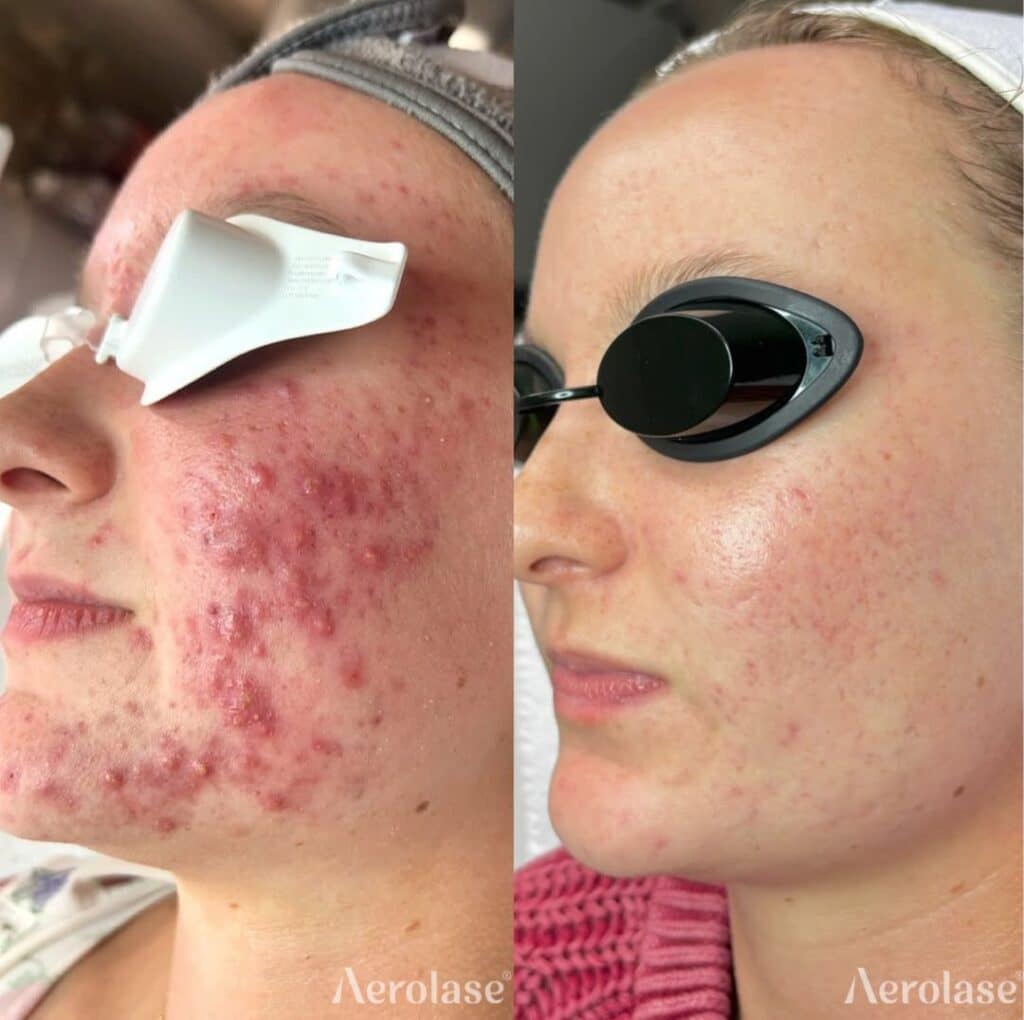
Acne is stubborn. You’ve tried the creams, the cleansers, maybe even antibiotics. Nothing sticks. If this sounds familiar, laser treatment might be the missing piece – and one device in particular has real clinical data behind it: the Aerolase NeoDerm laser. Here’s what it is, how it works, and what the published studies actually show.
What Is the Aerolase Laser?
The Aerolase NeoDerm is a 1064nm Nd:YAG laser. That’s a mouthful, so here’s the simple version: it uses a specific wavelength of light, delivered in extremely short bursts (650 microseconds), to target the root causes of acne under the skin. Unlike some older acne lasers, it doesn’t rely on harsh heat or peeling. It works gently, on top of the skin, with no anesthesia and no downtime.
How It Treats Acne
Acne isn’t just “dirty skin.” It’s driven by three things happening below the surface:
- Excess oil (sebum) production
- Inflammation
- Bacteria (C. acnes) living in clogged pores
The Aerolase laser is designed to address all three at once. The energy penetrates into the deeper layers of skin, where it calms overactive oil glands, reduces inflammation, and helps destroy acne-causing bacteria, without damaging the surface of the skin. Because the treatment doesn’t injure the skin’s outer layer, most patients can return to their normal routine, including makeup, the same day.
What the Clinical Studies Show
Here’s the research in plain terms.
It beat a fake treatment in a real study. In 2020, Kesty and Goldberg ran a randomized, double-blind study. That means neither patients nor evaluators knew who got the real laser. It was published in the Journal of Cosmetic Dermatology. The laser group improved significantly more than the sham group. Few acne devices have been tested this rigorously.
It works alongside acne medication, too. A second 2020 study, led by Dr. Michael Gold, tested the laser combined with isotretinoin. Isotretinoin is a common oral acne drug. This combo was studied for moderate to severe acne and acne scarring. It showed the laser can help even in tough cases.
The numbers, at a glance:
- 84% reduction in acne by the end of treatment
- 87% reduction in acne lesions at the 90-day mark
- 90–95% patient satisfaction during and after treatment
- Added improvements in redness, dark marks, and acne scarring
Dermatologists agree it works. A 2024 survey asked 50 dermatologists for their take. 92% said it was as effective, or more effective, than other acne devices. 82% said the same compared with topical retinoids.
It’s safe for all skin tones. This laser is FDA-cleared for every Fitzpatrick skin type, including darker and tanned skin. That matters. Many acne lasers carry a higher risk of pigment changes in deeper skin tones. This one doesn’t share that drawback.
Sources: Kesty K, Goldberg DJ. J Cosmet Dermatol. 2020;19(9):2295-2300. Gold MH, et al. J Drugs Dermatol. 2020. The survey and real-world clearance figures above come from dermatology industry/manufacturer-published summaries of clinical data rather than a single peer-reviewed paper.
What to Expect During Treatment
Most patients describe the sensation as a mild, warm snapping feeling , comparable to a light rubber-band flick. No numbing cream is typically needed.
A typical treatment plan looks like this:
- Session length: Around 15-20 minutes for a full face.
- Number of sessions: Most protocols use a series of treatments, spaced 1-2 weeks apart, based on severity.
- Downtime: None. Skin may look slightly flushed for a few hours.
- Visible results: Many patients notice calmer, less inflamed skin within days; full clearance data is typically measured around the 90-day mark.
Who Is a Good Candidate?
This treatment is generally well suited for:
- Mild, moderate, or severe inflammatory acne
- Patients who haven’t responded well to topical treatments
- Patients who want to avoid or reduce reliance on oral antibiotics
- All skin tones, including deeper Fitzpatrick skin types
- Patients who want a no-downtime option
As with any treatment, a consultation with a board-certified provider is the best way to confirm it’s right for your skin.
Frequently Asked Questions
Is the Aerolase laser painful? No. Most patients describe it as a warm tapping sensation. No numbing cream is required.
How many treatments will I need? This varies by acne severity, but most protocols involve a series of sessions spaced one to two weeks apart.
Is there any downtime? No. You can resume normal activities, including wearing makeup, immediately after treatment.
Is it safe for darker skin tones? Yes. It’s cleared for use on all Fitzpatrick skin types, including darker and tanned skin.
How soon will I see results? Some patients notice reduced redness and inflammation within days. Clinical data measures significant lesion reduction around the 90-day mark.
Ready to See if Aerolase Is Right for You?
Book a consultation with the L’AVENUE Derm team to find out whether this clinically studied laser treatment fits your skin and your acne history.
This article is for informational purposes only and is not a substitute for professional medical advice, diagnosis, or treatment. Individual results vary. Always consult a board-certified dermatologist or licensed provider to determine whether this treatment is right for you.