

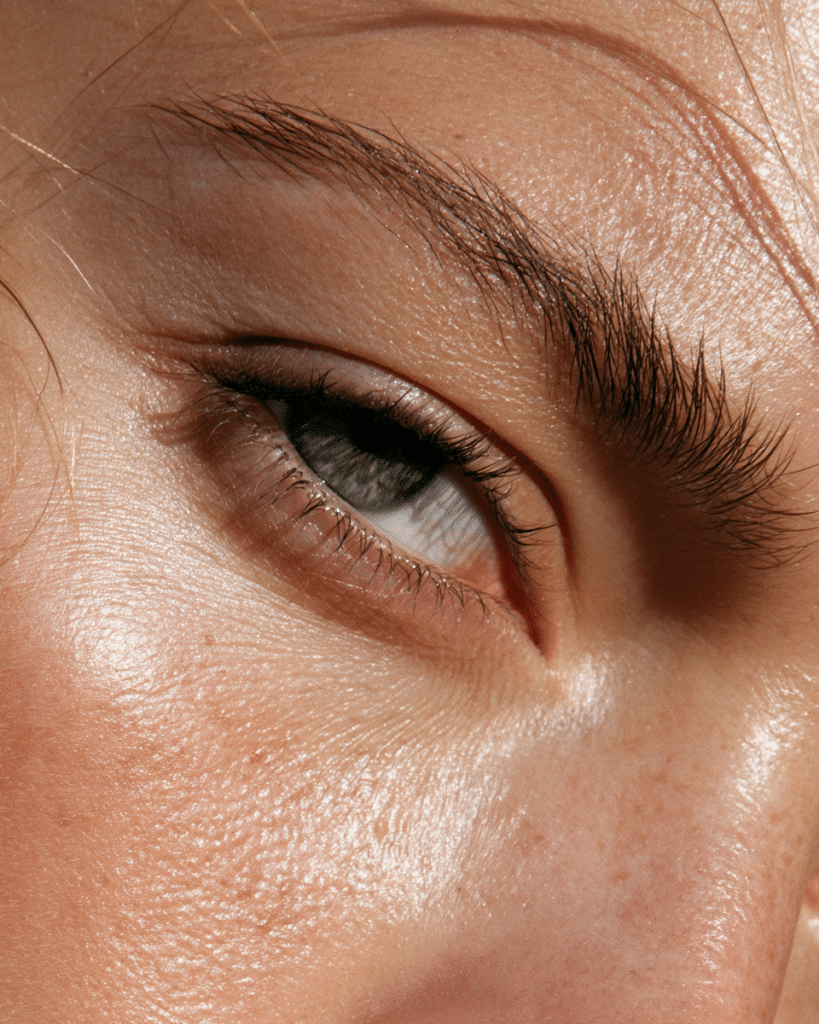
The under-eye area has always been the industry’s hardest problem. Thin skin. Complex anatomy. Real risk. This August, the FDA approved a new answer. Its name is RHA Redensity® Eye, and dermatologists are genuinely paying attention.
A Filler Built Specifically for the Eye Area
RHA Redensity® Eye comes from Teoxane®, developed with Revance®, and received FDA approval in August 2026. It is indicated specifically for moderate to severe volume loss beneath the eyes, medically called infraorbital hollowing, in adults twenty-two and older. This specificity matters more than it might sound. For years, providers used fillers approved for other areas, applying them “off-label” beneath the eyes. RHA Redensity Eye was studied, tested, and approved for this exact location.
Why the Under-Eye Area Is So Technically Demanding
The infraorbital region is thin, delicate, and anatomically complex. It sits close to major blood vessels connected to the eye’s own blood supply. A comprehensive review in Dermatologic Therapy, mapping facial vascular danger zones, specifically identifies the periorbital area as one of the highest-risk injection sites on the entire face. This is precisely why product choice here carries real weight. A filler too firm can look lumpy under thin skin. A filler too soft may not correct hollowing effectively. Getting this balance right has challenged the aesthetics industry for years.
What Makes This Formula Different
RHA Redensity® Eye is built using Teoxane®’s proprietary Preserved Network Technology, a gentle, heatless manufacturing process designed to preserve hyaluronic acid’s natural molecular structure. According to the manufacturer, this gives the product the highest dynamic strength and stretch of any hyaluronic acid filler currently available for under-eye treatment. In practice, this means the gel is engineered to move naturally with your face. The under-eye area flexes constantly: blinking, smiling, squinting. A filler that cannot flex with you tends to look stiff or visibly artificial over time. The formula also includes mepivacaine, a local anesthetic, built directly into the product. This is designed to improve comfort during injection, in an area where comfort has historically been a real concern for patients.
The Clinical Evidence Behind the Approval
FDA approval for RHA Redensity® Eye rested on a fifty-two-week US pivotal study. This was a prospective, randomized, evaluator-blinded, multicenter trial with a no-treatment control group, according to the companies’ official announcement. The results were genuinely strong. Ninety-three percent of treated patients showed aesthetic improvement at three months. Results lasted up to twelve months without any touch-up treatment, based on the company’s reported data. Perhaps most notably, RHA Redensity® Eye became the first hyaluronic acid gel to demonstrate effectiveness using patient-reported outcomes as a co-primary endpoint, in a US clinical study specifically for this facial region. In other words, the trial did not just measure how the results looked. It measured how patients actually felt about them.
What the Safety Data Actually Showed
The pivotal study reported no late-onset or serious treatment-related adverse events. There were no cases of granuloma or delayed inflammatory response. Critically, there were no vascular occlusion events recorded during the trial, according to the companies’ published results. Common side effects mirrored what patients typically experience with any dermal filler: temporary redness, swelling, tenderness, firmness, bruising, and mild discoloration at the injection site.
A Necessary Note of Balanced Caution
Reporting from Healio, a respected dermatology news outlet, offered valuable, measured perspective. This perspective is worth including here. A trial of this size can reliably identify common, lower-grade reactions. However, it was not designed to detect extremely rare vascular events. It was also not statistically powered for those events. Such events occur too infrequently for one trial to capture fully. This limitation is not unique to this particular product. It reflects a broader industry-wide limitation. Pre-approval trials face this challenge with all injectable products. That is why ongoing, real-world safety monitoring remains essential.
Provider skill and anatomical expertise are equally important. These factors matter regardless of the specific product selected. This context also reinforces a broader point emphasized by the FDA. In November 2025, the agency issued a safety communication about fillers near the eyes. The communication highlighted a genuine, though uncommon, risk of vision complications. These complications can result from improper injection technique in this sensitive region. The message was consistent: use FDA-approved products through trained, qualified professionals.
Joining a Small, Exclusive Category
RHA Redensity® Eye joins a genuinely short list of fillers specifically approved for infraorbital hollowing. This group previously included Juvéderm Volbella XC, approved in 2021, along with Restylane Eyelight and Belotero Balance, both approved in 2023. This expansion matters clinically. According to Dr. Joely Kaufman-Janette, the trial’s principal investigator and a board-certified dermatologist, there has “long been a need for a filler that meets the unique demands of the undereye area.” A broader, purpose-studied toolkit gives experienced providers more precise options for different tissue types and patient needs.
Who Might Actually Be a Candidate
Under-eye hollowing has several possible causes: genuine volume loss, thinning skin, or shadowing from the underlying bone structure. Not every case of “tired-looking” under-eyes stems from the same source, which is exactly why an in-person evaluation matters more than requesting a specific product by name. Patients experiencing genuine infraorbital volume loss, without significant excess skin or fat herniation better suited to surgical correction, are typically the strongest candidates for this category of filler.
What This Looks Like at L’AVENUE Derm
At L’AVENUE Derm, evaluating under-eye hollowing starts with a genuine anatomical assessment, considering your skin quality, underlying bone structure, and the specific pattern of volume loss you’re experiencing. Board-certified providers stay current with newly approved options like RHA Redensity® Eye, incorporating them thoughtfully when they represent a genuine fit for a patient’s specific anatomy, rather than defaulting to any single product regardless of individual need.
Given how technically demanding this area remains, provider experience matters here more than almost anywhere else on the face. This is not the place for trend-chasing or a bargain injector. It is precisely the area where anatomical expertise earns its value.
The Bottom Line
RHA Redensity® Eye represents a genuine, well-studied addition to a short list of fillers specifically approved for the under-eye area. Ninety-three percent of trial patients showed improvement at three months, with results lasting up to a year. Real promise exists here, alongside the same fundamental truth that governs all periorbital filler treatment: this delicate area demands genuine anatomical expertise, not simply a new product name.
This article is for general educational purposes and does not replace individualized medical advice. Discuss whether RHA Redensity Eye or another option is appropriate for your specific anatomy with a board-certified provider.
References
- “FDA approves RHA Redensity Eye for undereye hollowing.” Healio Dermatology. August 27, 2026.
- “Revance and Teoxane Announce the FDA Approval of RHA Redensity Eye for Undereye Hollowing.” BioSpace / PRNewswire. August 2026.
- “FDA Approves RHA Redensity Eye for Infraorbital Volume Deficiencies.” Plastic Surgery Practice. 2026.
- “RHA Redensity Eye Is Now FDA Approved for Under-Eye Hollows.” NewBeauty. 2026.
- Wollina U, Goldman A. “Facial vascular danger zones for filler injections.” Dermatologic Therapy. 2020;33(6):e14285.
- FDA safety communication on periocular filler injection risk, vascular occlusion and vision complications. November 2025.
- “US FDA Approves RHA Redensity Eye for Under-eye Hollows.” The Dermatology Digest. 2026.