
You’ve tried the cleansers, the spot treatments and probably even tried just waiting it out. And yet those same deep, tender bumps keep showing up along your jawline, month after month, like clockwork. If that sounds familiar, there’s a good chance your acne isn’t really about your skincare routine at all – it’s about your hormones. Here’s what’s actually going on, and what tends to work.
What “Hormonal Acne” Actually Means
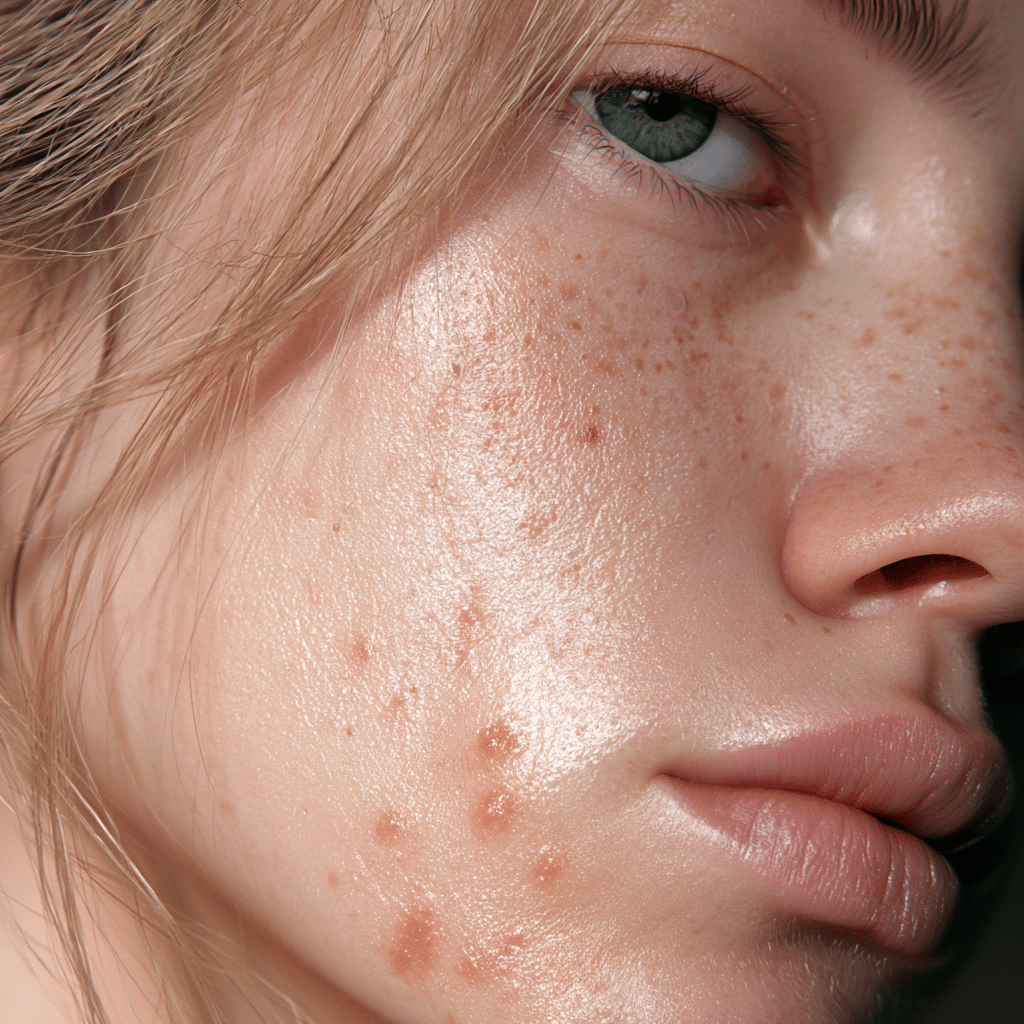
Hormonal acne is acne driven, at least in large part, by androgens : a group of hormones (including testosterone) that stimulate your skin’s oil glands. It shows up most often in adult women, tends to settle along the lower face, jawline, and neck, and – unlike a lot of acne , often responds well to hormonal treatment rather than just topical products.
Here’s the mechanism in plain terms:
- Androgens like testosterone, and a more potent relative called DHT, tell your oil glands to grow larger and produce more oil.
- That extra oil combines with clogged pores, acne-related bacteria, and inflammation, producing exactly the kind of breakouts you’re dealing with.
- Research shows elevated androgen levels are common in women with acne. But acne severity doesn’t line up neatly with exact hormone numbers on a lab test.
- That mismatch is telling: it’s not just how much hormone is circulating, but how sensitive your particular skin is to it, that matters most.
Why This Happens to You Specifically
Your Oil Glands May Just Be More Hormone-Sensitive
Some people’s skin has more of the enzyme that activates testosterone into its more potent form, or more receptors that respond to it, which means the same hormone levels can produce very different amounts of acne from one person to the next.
Insulin Plays a Bigger Role Than You’d Expect
Insulin and a related hormone (IGF-1) amplify oil gland activity, which is part of why acne tends to run more severe in conditions involving insulin resistance, like PCOS.
An Underlying Hormonal Condition Could Be Involved
PCOS (polycystic ovary syndrome) is the most common cause of hormone-driven acne. Less commonly, thyroid issues, elevated prolactin, or other endocrine conditions can play a role and a sudden, severe case can occasionally point to something that needs more urgent attention.
Something You’re Taking Could Be Feeding the Problem
Certain birth control methods (like progestin-only options), anabolic steroids, some seizure medications, lithium, and steroid medications can all trigger or worsen hormonal acne. Pore-clogging cosmetics, whey protein, and smoking are worth a second look too.
How to Tell If Your Acne Is Actually Hormonal
A few patterns are strong tip-offs:
Where It Shows Up
Hormonal acne tends to cluster on the lower face (jawline, chin, and neck) rather than spreading evenly across your whole face. In women with PCOS specifically, breakouts on the chest and upper back are also common.
When It Shows Up
A flare the week before your period is a classic sign. So is acne that’s stuck around since your teens, acne that started fresh as an adult, or acne that clears up and then returns.
How Stubborn It Is
If you’ve genuinely given standard treatment a fair shot and it’s just not working, that resistance itself is a clue – one study found a striking majority of women with treatment-resistant acne had measurable hormone imbalances.
What Else Is Going On With Your Body
Excess hair growth, irregular or missing periods, thinning hair at the scalp, dark patches of skin in body folds, or difficulty getting pregnant can all travel alongside hormonal acne.
Do You Need Bloodwork?
Not usually. Most hormonal acne can be diagnosed by pattern recognition alone. But if your acne is unusually severe, resistant to treatment, came on suddenly, or shows up with any of the signs above, your dermatologist may order hormone testing – typically testosterone, DHEA-S, and LH/FSH, sometimes with a few additional tests depending on what they’re ruling out.
What Actually Works
Start With the Basics
Topical retinoids, benzoyl peroxide, and azelaic acid are reasonable starting points for any acne, hormonal or not, and they’re often layered in alongside whatever hormonal treatment comes next.
Combined Oral Contraceptives
Certain birth control pills genuinely reduce hormonal acne – not as a side effect claim, but as something actually studied in clinical trials.
- One placebo-controlled trial: about a 51% drop in inflammatory breakouts, vs. about 35% on placebo.
- Another trial: roughly 46% improvement, vs. 31% on placebo.
- Not every pill works equally well – formulations with “anti-androgenic” progestins (like drospirenone) tend to help acne more than older formulations, some of which can actually make it worse.
Spironolactone
This medication blocks androgens from affecting your oil glands and is a particularly popular option for adult women, especially those with a PCOS-related pattern. It’s not safe during pregnancy, and it’s often paired with a birth control pill both for reliable contraception and to smooth out any menstrual side effects.
Oral Antibiotics
Useful for calming inflammation in moderate-to-severe acne, typically used short-term and paired with a topical treatment to avoid resistance.
Isotretinoin
Reserved for severe, scarring, or truly stubborn cases is highly effective, but it requires close medical monitoring and isn’t appropriate during pregnancy.
Why Patience Is Part of the Plan
Here’s the part nobody loves hearing: hormonal treatments take longer to kick in than a topical antibiotic. You’re looking at two to three months, sometimes more, before you see a real difference because you’re working with your body’s underlying cycle, not just what’s on the surface. Giving up at week four is the single most common reason hormonal acne treatment “doesn’t work.”
When to Loop In a Dermatologist
It’s worth getting a professional opinion if:
- Your breakouts cluster along your jawline
- They flare with your cycle
- They haven’t budged despite a real effort with over-the-counter products
- You’re also noticing irregular periods or unexpected hair growth
If there’s an underlying condition like PCOS involved, treating it directly tends to help the skin far more than chasing topical products ever will.
The Bottom Line
Hormonal acne isn’t a sign you’re not trying hard enough. It’s a different process, running on a different timeline, and it usually needs a different kind of treatment. Once you find the right hormonal approach for your body, the stubborn jawline breakouts that never seemed to respond to anything finally start to make sense.
This article is for general educational purposes and isn’t a substitute for a medical evaluation. If you suspect your acne is hormonal, a dermatology consultation can help confirm the cause and build an appropriate treatment plan.